Essays/September 2026
How to talk to a kid about a bully at school
Plain steps for parents and teachers when a kid names a bully—playground, jokes, hallway, and the quieter voice kids use on themselves.
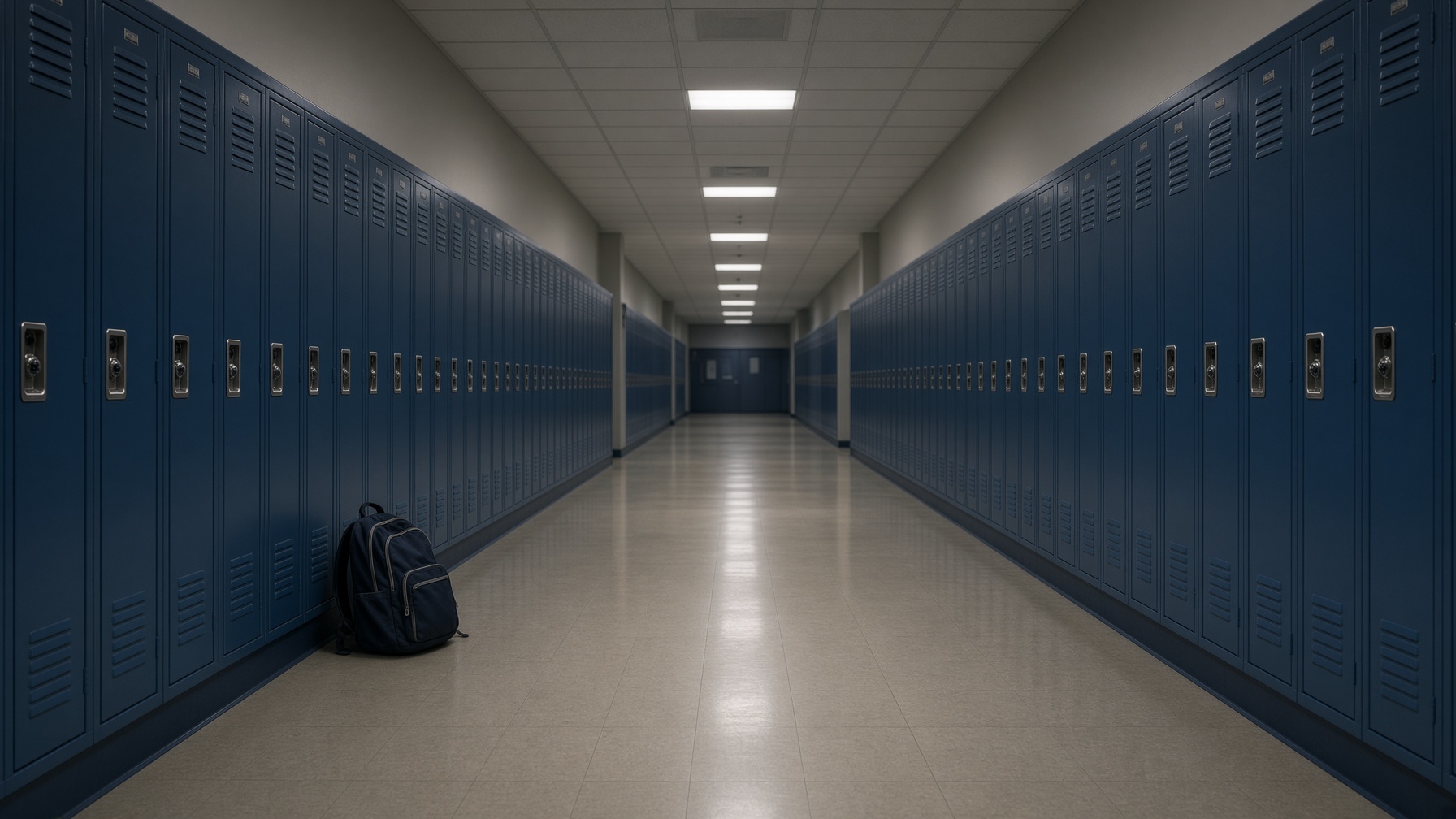
Kids rarely start with a speech. They start with a shrug. A dropped backpack. “It was fine.” Then, if the room feels safe enough, a name. Or a joke that wasn’t funny. Or a hallway that somehow got longer.
You do not need a perfect script. You need a kitchen-table conversation that treats what happened as real—and that does not turn the kid into a project.
Start by believing the report. When a child says someone is mean, your first job is not to solve it in thirty seconds. Your first job is to hear it without shrinking it.
“Sticks and stones” is a lie. Names follow people into adulthood. The cartoon bully—big fists, one villain, one tidy fight—is also a lie. A lot of harm at school is quieter: jokes, exclusion, power used in hallways and group chats, adults who laugh along because it’s easier.
So when your kid talks, try this first: put the phone down. Ask what happened, in their words. Repeat back one clear sentence so they know you heard it. Say you believe them before you ask what they want next.
You are not cross-examining. You are building a place where the truth can land.
Name bullying without theater. Kids watch how adults react. If every report becomes a courtroom, they stop reporting. If every report becomes a pep talk about toughness, they learn to swallow it.
Name what you see without making a show of it. Useful language sounds ordinary: “That joke was about you, not with you.” “Leaving someone out on purpose is still bullying.” “Calling someone a name is not ‘just kidding’ if it keeps happening.” “You did not deserve that.”
Adults bully too—through policy, through who they believe, through jokes that land on the weakest person in the room. Kids notice. When you name the pattern calmly, you teach them that noticing is allowed.
You do not need a speech. One true sentence is often enough.
Cover the quieter forms, not only the playground. Talk about the loud version and the soft version.
Playground and hallway. Pushing, crowding, following. The kid who suddenly has no seat. The walk between classes that feels unsafe.
Jokes. Humor used as cover. The room laughs; the target learns to laugh too so it ends faster.
Self-talk. Some kids start repeating the name in their own head. That is bullying too—the kind that travels home in silence. Inner harm is still harm. The first person who has to stop bullying you is you. Adults can help a kid notice when that voice started sounding like the bully.
Ask gently: “When you think about school, what sentence shows up first?” If the sentence sounds like someone else’s cruelty, say so. Help them separate their voice from the borrowed one.
What to do in the conversation itself. Keep it short enough to finish. Kids do not need a lecture. They need a plan they can picture tomorrow.
A simple arc: What happened? Facts first. Who, where, how often. How did it feel? One word is fine. Scared, small, mad, tired. What have you already tried? Walking away, telling a friend, telling a teacher. Respect what they attempted. What do you want next? Safety, a seat change, an adult who watches the hallway, help practicing one sentence. One concrete Monday move. Not ten. One.
Examples of Monday moves that stay concrete: tell a specific teacher what happened, with one adult present if that helps; sit with a known safe person at lunch for one week and check in each afternoon; practice one line — “That’s not okay. Stop.” — said once, then find an adult; write the name and the pattern down so the kid is not carrying it alone in their head; agree on a check-in time after school that is not an interrogation.
If the kid wants you to stay quiet for now, ask why. Fear of making it worse is real. Still, safety comes first. You can respect their pace without pretending silence is always the answer.
For teachers and other adults at school. You do not need a dramatic intervention to be useful. You need consistency. Believe quiet reports the same way you believe loud ones. Interrupt the joke in the moment, briefly, without a speech that humiliates anyone for sport. Watch the spaces between classes. A lot of harm lives there. Follow policy, and also notice when policy is used to protect the adult’s comfort instead of the kid’s safety. After you name it, pick one follow-up you can keep: a seating change, a monitored transition, a call home that is factual and calm.
Name bullying without theater. Then pick one concrete move for Monday. That line is enough to run a week on.
What not to do. Do not ask the kid to “toughen up” as the plan. Do not force a public apology theater that makes the target perform forgiveness. Do not invent a rivalry story if the pattern is power, not conflict. Do not promise you can fix every peer. Promise you will not leave them alone with it. Do not skip the quieter forms because they are harder to photograph.
A note on your own nerves. Parents and teachers get scared too. You may want to storm the office. You may want to minimize so you can sleep. Both impulses are human. Neither is the whole job.
Your job is to stay in the room with the kid long enough to turn a foggy hurt into one named pattern and one next step. Tomorrow can be ordinary again—safer, not magical.
If you are supporting an LGBTQ kid, or any kid whose difference gets used as material, say out loud that the problem is the bullying, not who they are. Inner homophobia is still bullying when it starts living in a young person’s own mouth. The cartoon version of the bully will not explain that. You can.
Keep the conversation open. End with an invitation, not a closing argument. “Tell me again if it happens.” “We can change the plan if this one doesn’t work.” “You are not dramatic for noticing.”
Then do the Monday move. Check whether it helped. Adjust without shame.
Kids learn how to talk about harm by watching how we talk about it. Plain words. Short sentences. Useful tomorrow. That is enough for a real conversation at the kitchen table—and enough for the hallway after.
If this subject is on your desk right now, the free lesson The Cartoon Bully Is a Lie goes deeper on why the cartoon version fails and how naming works in school and work. Bullies Among Us is the short guide on the books page if you want something you can hold and share.